

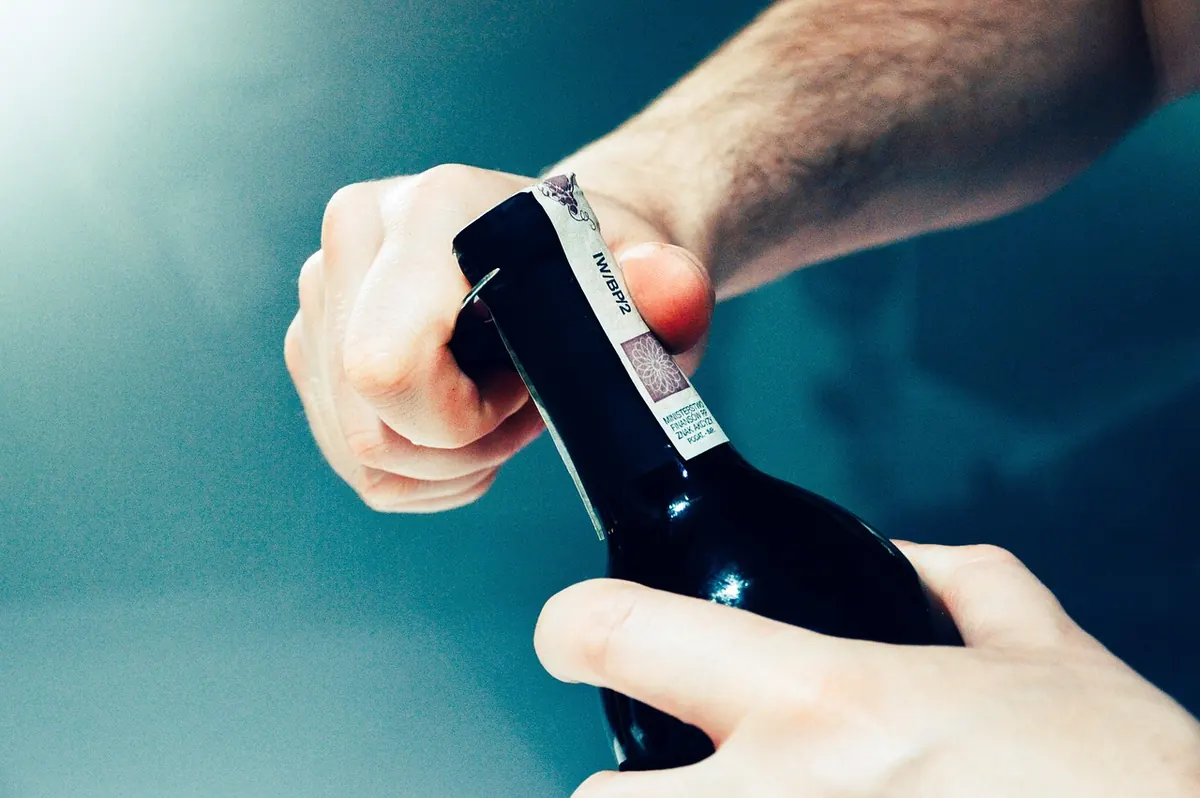
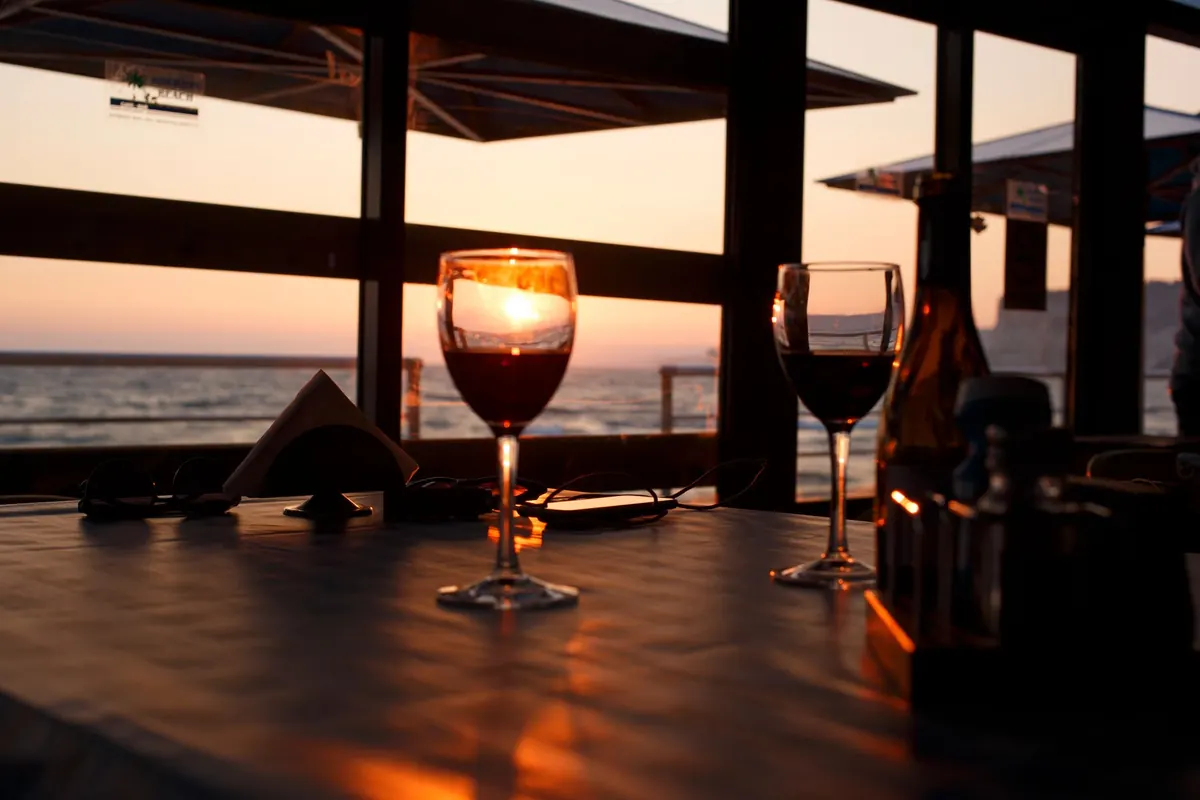
Ten past ten. The plates are stacked, the kitchen light is the only one still on, and someone suggests opening a bottle. There is nothing unreasonable about that impulse. What usually goes wrong is the choice: the same big red that carried dinner gets poured again at an hour when nobody is eating, nobody is hungry, and everybody has to be somewhere in the morning.
Wine behaves differently late at night, and not only because you have already had a glass or two. Your palate is tired, your stomach is fuller than it was at eight and emptier than it will be at breakfast, and the food that softened the wine is now in the sink. The bottle that tasted generous at dinner can feel heavy, drying and strangely persistent at eleven. Choosing for the hour is a small skill worth learning, and it comes down to three things: alcohol, tannin and sweetness.
Why the same wine tastes different at ten
At dinner, food does a lot of quiet work. Fat and protein coat the palate and blunt tannin, salt makes acidity feel softer, and the sheer act of chewing keeps you noticing flavour rather than texture. Take the food away and the wine's structure moves to the front. A tannic red suddenly feels like it is scraping your gums. An oaky white that seemed plush now reads as sweet and slightly tired.
Palate fatigue is real as well. By the end of a long day your senses are less interested in complexity and more interested in comfort. This is why so many people reach for something cold, bubbly or gently fruity after ten — the palate is asking for refreshment, not for a lecture on terroir. If you listen to that request instead of fighting it, the last glass of the evening tends to be the pleasant one rather than the one you regret.
Alcohol: the number that decides how the night ends
Alcohol is the single most useful thing to check on a label late at night, and it is printed right there. A 150 ml glass of a 14.5% wine carries roughly a fifth more pure alcohol than the same glass at 11.5%. That difference is easy to ignore over an hour and very hard to ignore at six in the morning.
Higher-alcohol wines also feel warmer and heavier in the mouth, which is pleasant in winter and oppressive in a small kitchen at midnight. They tend to leave a sweet, lingering heat at the back of the throat that makes you thirsty — and thirst at midnight usually gets answered with another glass rather than a glass of water.
For late evenings, look for bottles in the 11% to 12.5% range, and don't be suspicious of anything under 11%. Some of the most useful late-night wines in the cellar sit between 5% and 10%, because they were never designed to be strong in the first place. Nothing here cancels the effects of alcohol itself: a lower number means a gentler glass, not a free one. If you find yourself drinking to get to sleep, or if late-night drinking has become a habit you would like to change, that is worth raising with a doctor rather than solving with a wine list.
Tannin: why that last red feels like sandpaper
Tannin is the drying grip you feel on your gums and the inside of your cheeks. It is not a flaw; it is structure, and it is the reason a young Nebbiolo or an Aglianico can stand up to braised beef. It is also the reason those wines are the wrong choice at eleven o'clock, when there is nothing on the table to absorb them.
Without food, tannin accumulates. The first sip feels firm, the second firmer, and by the third you are aware of your mouth in a way you would rather not be. Tannin also seems to hold flavour longer, so a drying red can leave you tasting it while you brush your teeth.
The fix is not to abandon red altogether but to move towards wines with soft, fine-grained tannin and good acidity: Gamay, Pinot Noir, Frappato, Schiava, Dolcetto, Barbera, a light Cerasuolo d'Abruzzo. Save the structured bottles — Barolo, Amarone, warm-climate Cabernet, Tannat, Sagrantino — for evenings that begin earlier and last longer.
Sweetness and acidity: the comfort-versus-cloying line
A little sweetness after ten can feel like a kindness, especially in cold weather. A gram or two of residual sugar rounds the edges of a wine and makes it feel soothing. Too much, and the glass turns sticky and thirst-making: you finish it and immediately want water, or worse, another pour to chase the first.
Acidity is the better lever. Crisp acidity keeps a wine lively without weight, cleans the palate instead of coating it, and makes a small pour feel satisfying. That is why Muscadet, Chablis, Txakoli, Soave and dry Riesling work so well late — they taste of something rather than of sweetness, and they leave your mouth feeling fresh rather than furred.
A wine that is easy to stop drinking is worth more at eleven at night than a wine that is impressive.
Bottles worth opening after ten
The exact selection in your cellar will differ, but these styles are reliably kind to late hours. ABV figures are typical ranges rather than fixed numbers, so check the label.
- Moscato d'Asti — Piedmont, usually around 5%. Gentle fizz, peach and orange blossom, low alcohol. Serve very cold in a small glass.
- Brachetto d'Acqui — also around 5%, softly sparkling, red-fruited and sweet-scented. A dessert in itself; a small pour goes a long way.
- Prosecco or Trentodoc — typically 11–12.5%, dry. Bubbles make a modest pour feel like an occasion.
- Lambrusco di Sorbara — often 10.5–11.5%, dry and frothy with piercing acidity. Excellent with nothing but good bread.
- Vinho Verde — usually under 11.5%, light, slightly spritzy, faintly herbal.
- German Kabinett Riesling — frequently 8–10%. Choose trocken or feinherb if you want freshness rather than sweetness.
- Muscadet, Chablis, Soave Classico, Vermentino — typically 11–12.5%, crisp and saline. The safe harbour of the late-night cellar.
- Cool-climate Pinot Noir, Gamay, Spätburgunder — around 12.5–13%, red-fruited, soft tannin. Chill lightly.
- Frappato, Schiava, Cerasuolo d'Abruzzo — Italian lightweights under 13%, fragrant and uncomplicated.
How to pour so that one glass is enough
Choosing well is half the work; serving well is the other half. These habits make more difference than any single bottle.
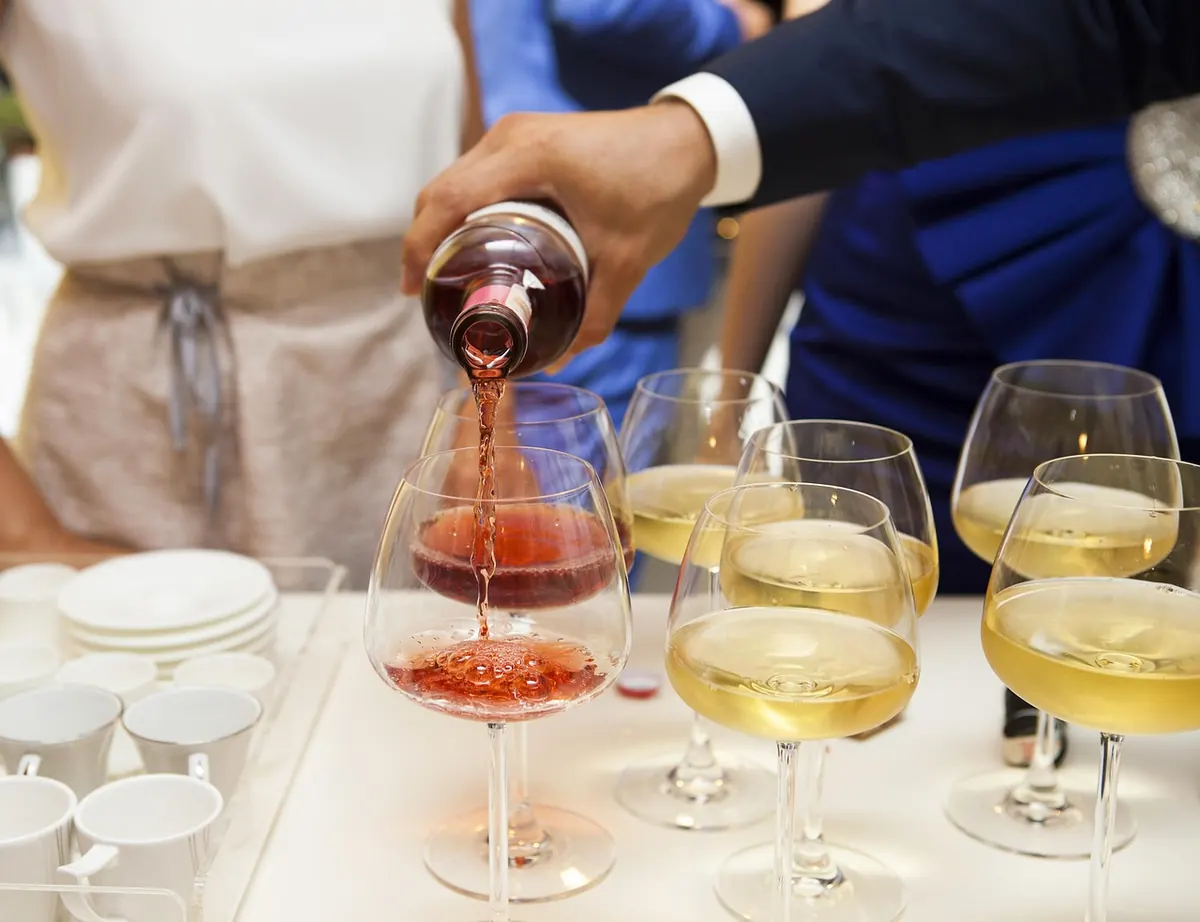
- Use a smaller glass. A 90 ml pour in a small tulip looks generous and drinks slowly. The same wine in a large balloon glass disappears without anyone noticing.
- Chill lighter reds. Twenty minutes in the fridge wakes up Gamay and Frappato and makes them taste fresher.
- Put water on the table first. A full glass beside the wine glass, not fetched later.
- Eat something small. A piece of cheese, a slice of bread with olive oil, a few olives. It softens tannin and slows the pace.
- Decide the number before you open. One glass, maybe two, then cork it. A half bottle or a 500 ml format removes the decision entirely.
- Move the bottle. Re-cork it, put it back in the fridge or cellar, and turn off the kitchen light. Distance does more than willpower.
The ten o'clock rule
If you take one thing from all of this, make it a simple test: after ten, put back anything above 14% alcohol, anything with serious tannin, and anything sweet enough to make you thirsty. Keep two or three light bottles in the cellar specifically for late evenings — a bone-dry white, a chilled light red, something with bubbles — so the good choice is also the easy one.
Wine at midnight should feel like a small pleasure, not a decision you spend the next morning regretting. Choose lighter, pour less, drink it slowly, and let the last glass of the day be the one you actually remember.
Photo: Milada Vigerova / Pexels